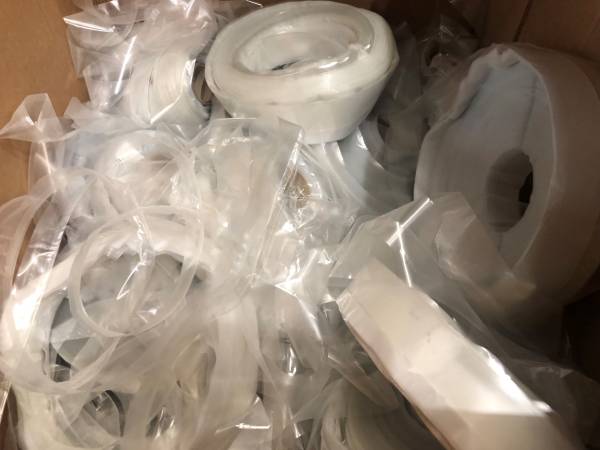
Pallet wrap, shrink film, offcuts and packaging turn up on almost every site, and they never seem to stop. Plastic weighs very little, but it fills bins, cages and corners faster than almost anything else you throw away.
Recycling it properly does more than tick a green box. It can cut your collection costs, free up floor space, keep your site safer and give your team time back. Below we look at each benefit in turn, and at how the machines we supply at Kenburn help you get there. If you already know you need a machine, take a look at our plastic balers.
1. Fewer Collections and Lower Waste Costs
Loose plastic is mostly air. When it goes into a general waste bin or skip, you pay for the space it takes up, not the weight, so every collection carries far less than it could.
Compacting plastic into tied bales changes that. A compact machine like the Europress Balex 10 produces very dense bales of up to 110kg, and the Europress B-Max can make bales of up to 500kg of plastic. On sites with larger volumes, our UK-made KH40 horizontal baler handles plastic film in bales of up to approximately 500kg.
Dense bales mean fewer bins to empty and fewer lorries to book. For many businesses, that is the quickest saving they see.
2. More Space on Site
Loose plastic has a way of spreading. It creeps out of cages, piles up by loading doors and ends up taking space you would rather use for stock, production or a clear walkway.
Once plastic is baled, it stacks neatly on a pallet and sits in a small, tidy area until collection. The machines themselves are designed to fit in, too. The Balex 10 stands just 1920mm tall, and every Balex model has a low overall height, so it can sit in a stockroom or back-of-house area without major building work.
The Europress B-Max goes a step further. Its bales are sized to fit Euro pallets, and it can make half bales when space or collections call for it.
3. Turning Clean Plastic into a Recycling Return
Plastic you pay to dispose of can become plastic that recyclers want. Clean, well-sorted bales are easier to recycle, and depending on the type of plastic and the market at the time, they can earn a return rather than cost you money. Returns vary, so we look at your plastics during our site survey and give you an honest view.
Getting dense bales from springy plastic
Plastic has a memory. Press it down and it tries to spring back into shape, which leads to light, loose bales. Every Balex baler has two modes of operation, and Mode 2 is set up for plastics. In this mode the ram stays down after each press, which stops the material bouncing back. When you are ready to load again, one press of the green start button lifts it.
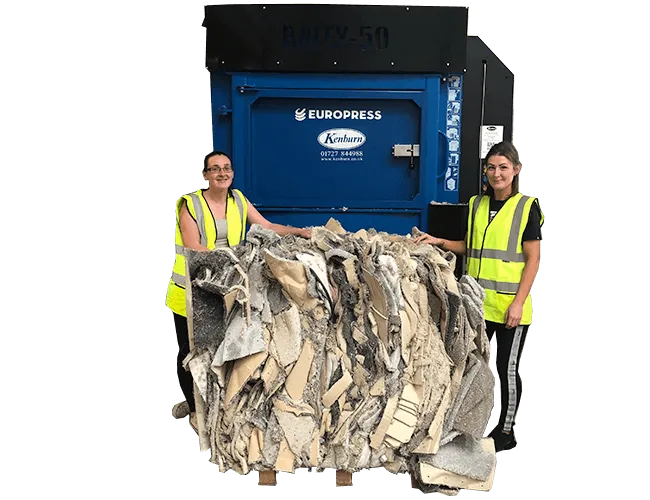
That makes a real difference with tricky materials. One UK maker of thermoformed packaging chose a Balex 50 for its plastic offcuts, and you can read how they solved their thermoformed plastic waste. Bond a Band, a manufacturer of protective film, uses a Balex baler for its film offcuts, with the cycle slowed down to make heavier, denser bales.
4. Less Cross-Contamination
A bale is only as valuable as it is clean. When plastic gets mixed with cardboard, food or general waste, it can be downgraded or rejected, and the return disappears.
Baling keeps each material in its own stream. Because every Balex model has one mode for cardboard and one for plastics, you can use the same machine for both, making separate bales of each rather than mixing them. Your plastic stays plastic, your cardboard stays cardboard, and both are more attractive to recyclers.
Separating waste is now the law for most workplaces in England, too. Under the government’s Simpler Recycling rules, dry recyclables including plastic must be kept apart from food waste and general waste before collection.
5. Sustainability and Reporting
Meeting your recycling duties
Simpler Recycling came into force on 31 March 2025 for workplaces in England with 10 or more full-time equivalent employees. Micro-firms with fewer than 10 have until 31 March 2027. A baler gives you a simple, visible way to keep plastic separate and show that it is being recycled.
Knowing what you recycle
Counting bales is a straightforward way to track how much plastic leaves your site for recycling, which helps with environmental reports and customer questionnaires. The B-Max can be fitted with Europress SMART, which adds a bale counter and remote monitoring, as an optional extra.
Recycling more plastic also means less going to general waste, which supports the sustainability goals many customers now ask their suppliers about.
6. A Safer, Tidier Workplace
Loose plastic underfoot is a trip hazard, and overflowing bins and cages make a site look and feel untidy. Baling contains it in one place.
Safety is built into the machines as well. Every Balex baler has a key-operated lock switch fitted as standard, so only staff with the key can run it. They meet the EN 16500 safety standard and have clear pictogram instructions on the front panel. The Balex 30 adds a two-handed bale ejection system, and the feed door on our KH40 horizontal baler is interlocked for safety.
Balex balers are also quiet, running at 59 dB, so they can sit close to shop floors and offices. One Finnish supermarket next to a residential area runs its B-Max in the evenings without disturbing the neighbours.
Training matters too. With every installation and commissioning, we train up to three of your staff at no extra cost, and each one receives an individual certificate.
7. Time Back for Your Team
Breaking down, bagging and carrying loose plastic eats into the working day. A baler placed where the waste is created cuts out a lot of that walking and handling.
Small design details add up. The Balex 20 has a cycle time of just 23 seconds, a front-mounted strap box and a built-in strap cutting blade, so tying off a bale is quick. A bale full light tells staff when to tie off, so nobody has to guess. For very high volumes, our KH40 semi-automatic horizontal baler handles up to 40 tonnes of material a week, and our twin ram fully automatic models tie their own bales with wire.
Choosing the Right Machine for Your Plastic Waste
The right machine depends on how much plastic you produce, what kind it is and how much space you have. As a rough guide:
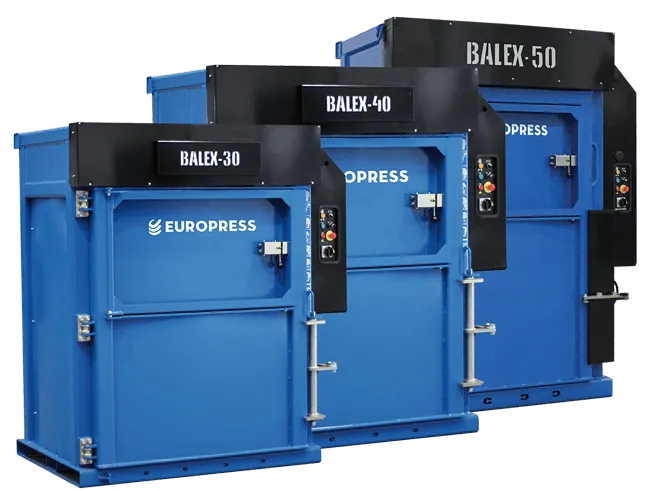
Vertical balers suit most sites where plastic builds up steadily through the day. The Europress Balex range runs from 10 to 50 tonnes of compaction force, with the B-Max for larger bales.
Horizontal balers suit sites with high, continuous volumes of film or bottles, often fed by a conveyor or hopper.
You can compare vertical and horizontal models, with the specs for each, in our plastic baler range.
Kenburn has supplied balers and compactors since 1987 and has installed over 4,000 machines. We are accredited to ISO 9001 and Safe Contractor, and our engineers provide nationwide servicing for any make of baler or compactor. New Europress Balex balers come with a two-year warranty. You can buy, lease or rent, and see our finance options for three or five year rental terms. Refurbished machines with a 12-month warranty are also available.
Frequently Asked Questions
Does my business have to recycle its plastic waste?
If you are a workplace in England with 10 or more full-time equivalent employees, yes. Since 31 March 2025, the Simpler Recycling rules require you to keep dry recyclables, including plastic, separate from food and general waste. Micro-firms have until 31 March 2027. Scotland, Wales and Northern Ireland have their own rules.
Can I bale plastic offcuts from manufacturing?
Often, yes. Kenburn has supplied Balex balers to manufacturers of thermoformed packaging, rigid plastic packaging and protective film, all baling their own production offcuts. Plastic mode can be adjusted for soft and rigid plastics. We will check your material during a site survey, or you can browse our balers for plastic waste first.
What happens during a free site survey?
One of our waste specialists visits your site at no cost and with no obligation. We look at how you handle waste now, the types and volumes you produce and the space available, then recommend the changes that will save you money. We offer surveys anywhere in mainland UK.
Book Your Free Site Survey
Every site is different, and the best way to see what recycling your plastic could save you is to let us take a look. Book your free, no-obligation site survey or call our sales team on 01727 844988.