

 Every UK flooring business hits the same wall eventually. Offcuts pile up in the yard. Uplifted carpet from installations fills the van faster than the job itself. Skip invoices creep up quarter after quarter, and finance starts asking questions about why waste disposal costs almost as much as the fitters.
Historically estimated at around 400,000 tonnes a year, UK carpet waste is still mostly heading to landfill or energy recovery rather than closed-loop recycling. For flooring retailers, contractors, and fit-out firms, that waste is not just an environmental problem. It is a live cost line on the P&L. This is where a carpet crusher earns its place.
This guide covers what a carpet crusher actually is, how it works, and how to tell whether one belongs in your operation.
What a carpet crusher actually is
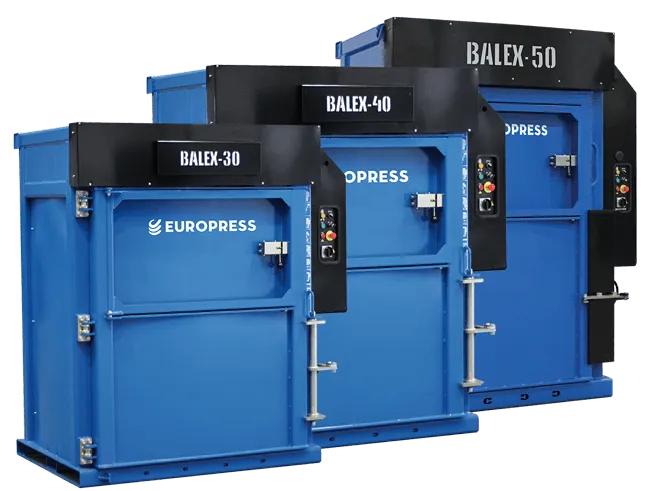
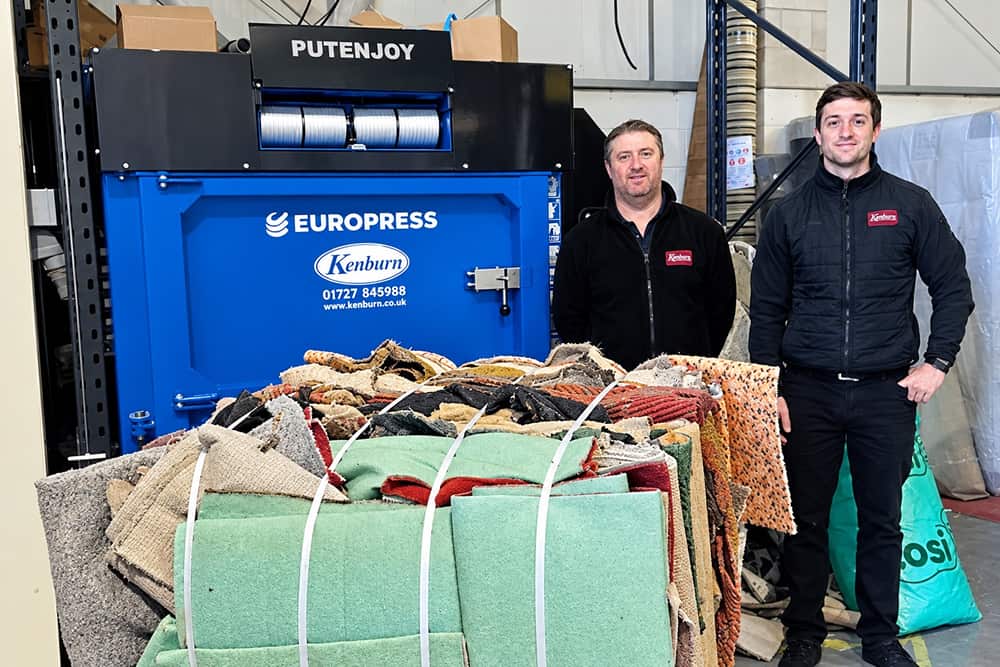
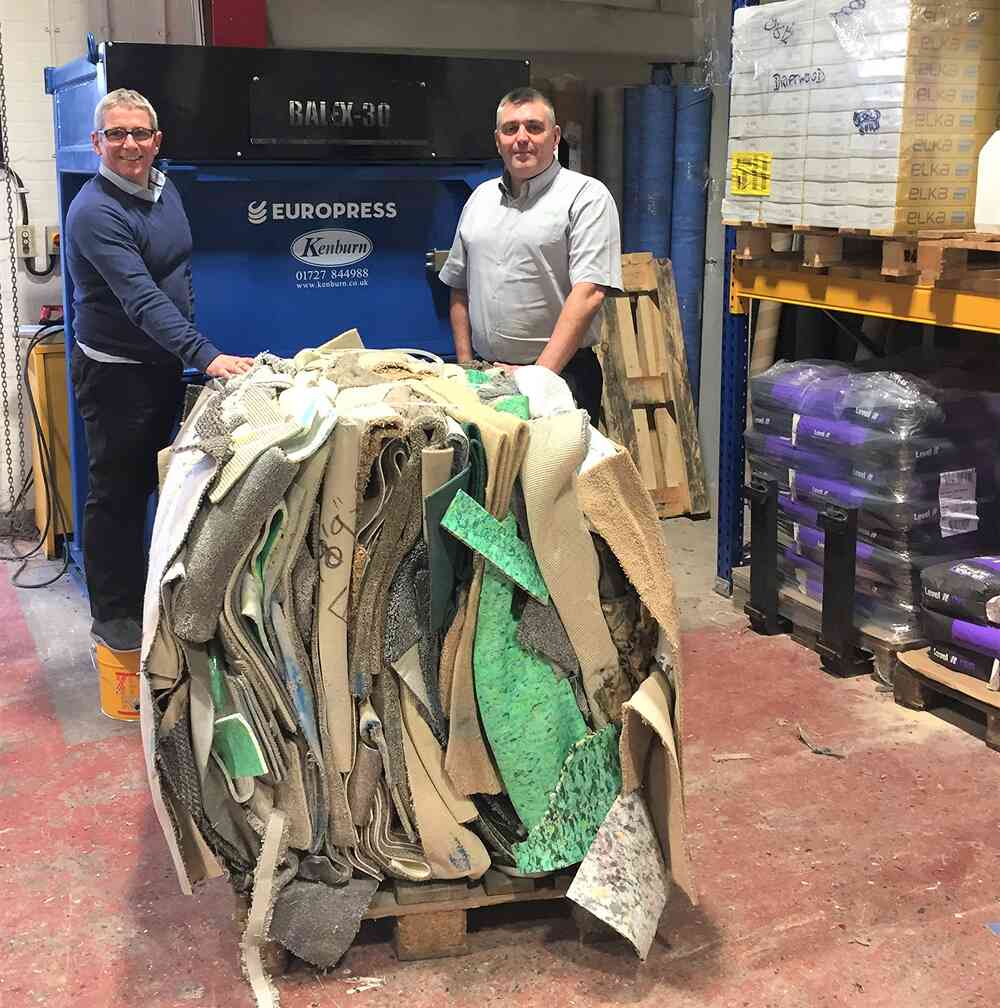
A carpet crusher is a specialist vertical baler built specifically to compact waste carpet and underlay. It uses a hydraulic ram to apply high tonnage force onto a wide-mouth chamber, crushing bulky offcuts and roll ends into dense, pallet-ready bales.
The word “crusher” throws some people off. It is not a shredder. It does not cut the carpet into small pieces. It compresses it, hard, into a block that is small enough to move economically and clean enough to send to a recycling outlet.
The two features that set a carpet crusher apart from a standard waste baler are the width of the load opening and the ram force behind it. Carpet is bulky, resilient, and springs back the moment you stop pressing it. You need a chamber wide enough to take larger offcuts without breaking them down piece by piece, and enough force to hold the bale in shape once compressed.
How a carpet crusher works
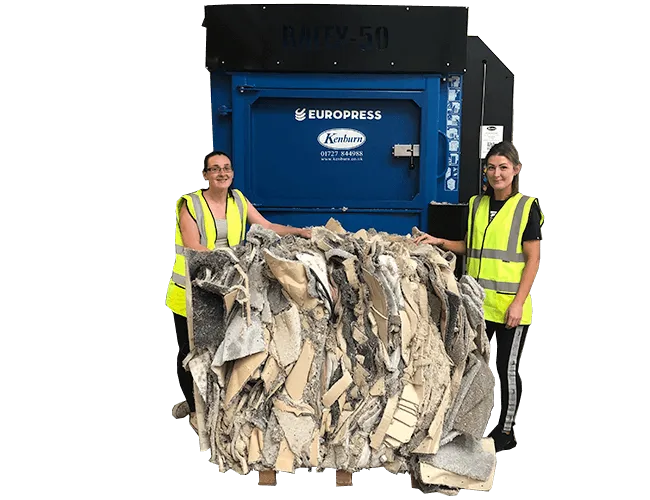
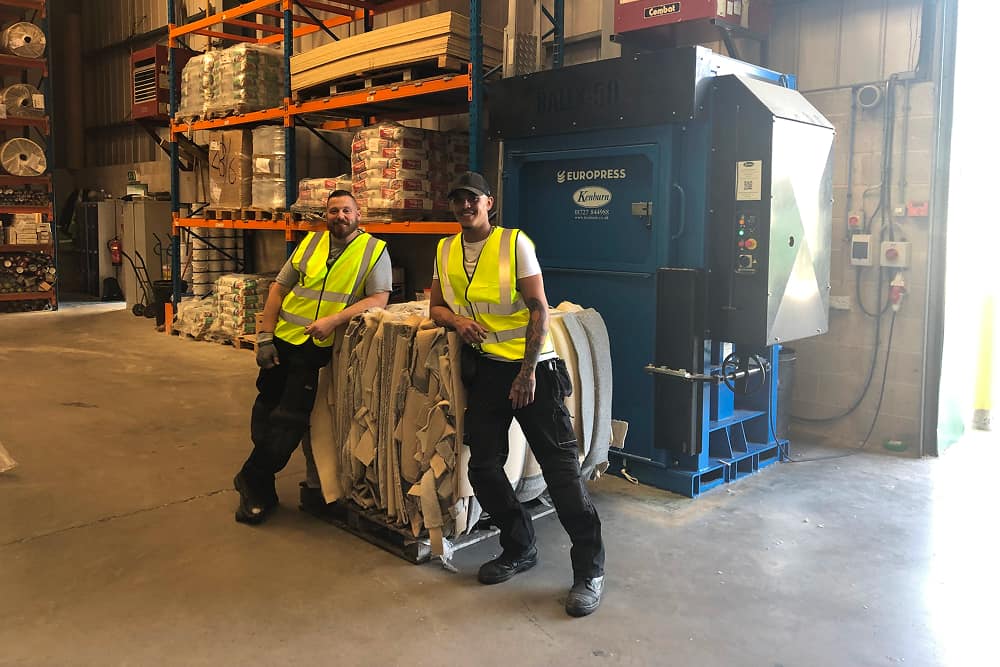
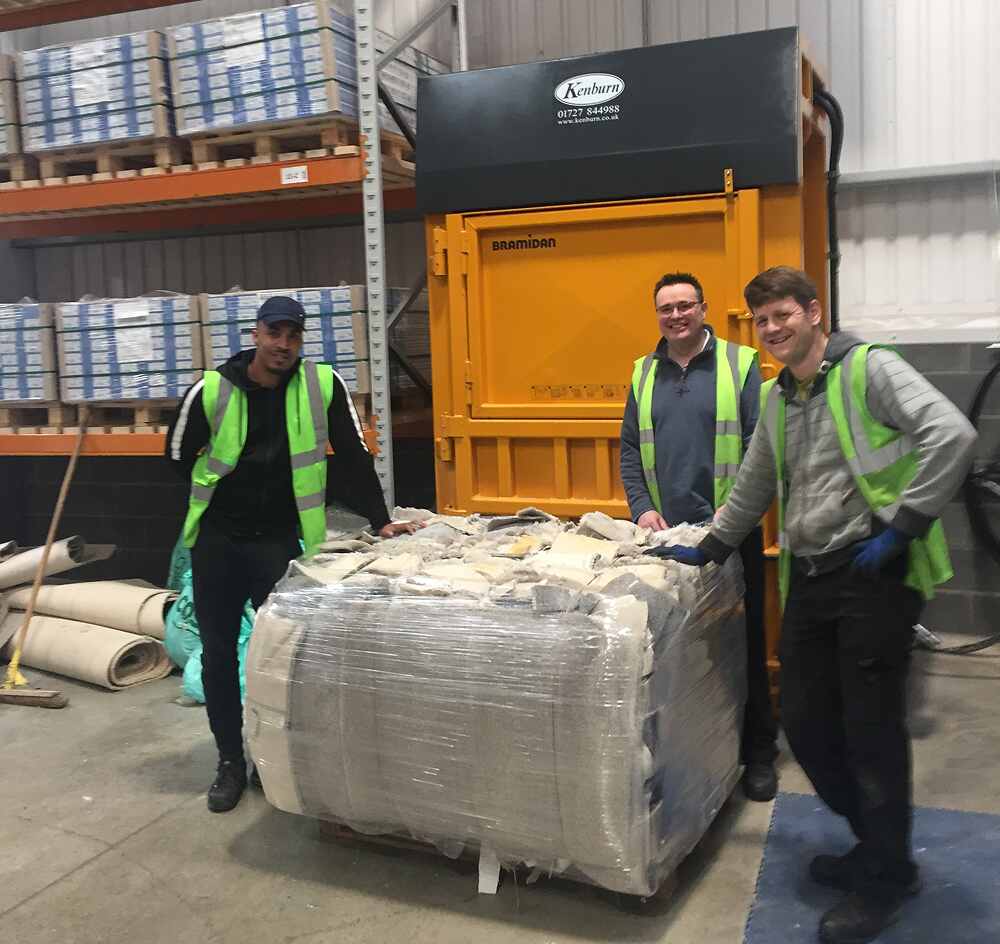
The process is straightforward. An operator loads carpet, underlay, or a mix of both into the chamber through the wide load opening. The hydraulic ram descends and applies compaction force onto the material. Once the chamber is full and the final press is complete, the compacted bale is ejected onto a pallet, ready for collection.
The Kenburn carpet crusher applies 30 tonnes of compaction force at a 4:1 ratio. In practical terms, that fits 175 square metres of carpet onto a single standard pallet. The Balex 30 model runs at 59 dB, which is quiet enough to sit inside a working showroom or warehouse without disrupting anything else on site.
The machine is not fussy about what you put in it. Alongside carpet and underlay, it also compacts cardboard and plastic film waste. For most flooring businesses, that covers almost every waste stream they produce in one machine.
The waste problem it solves
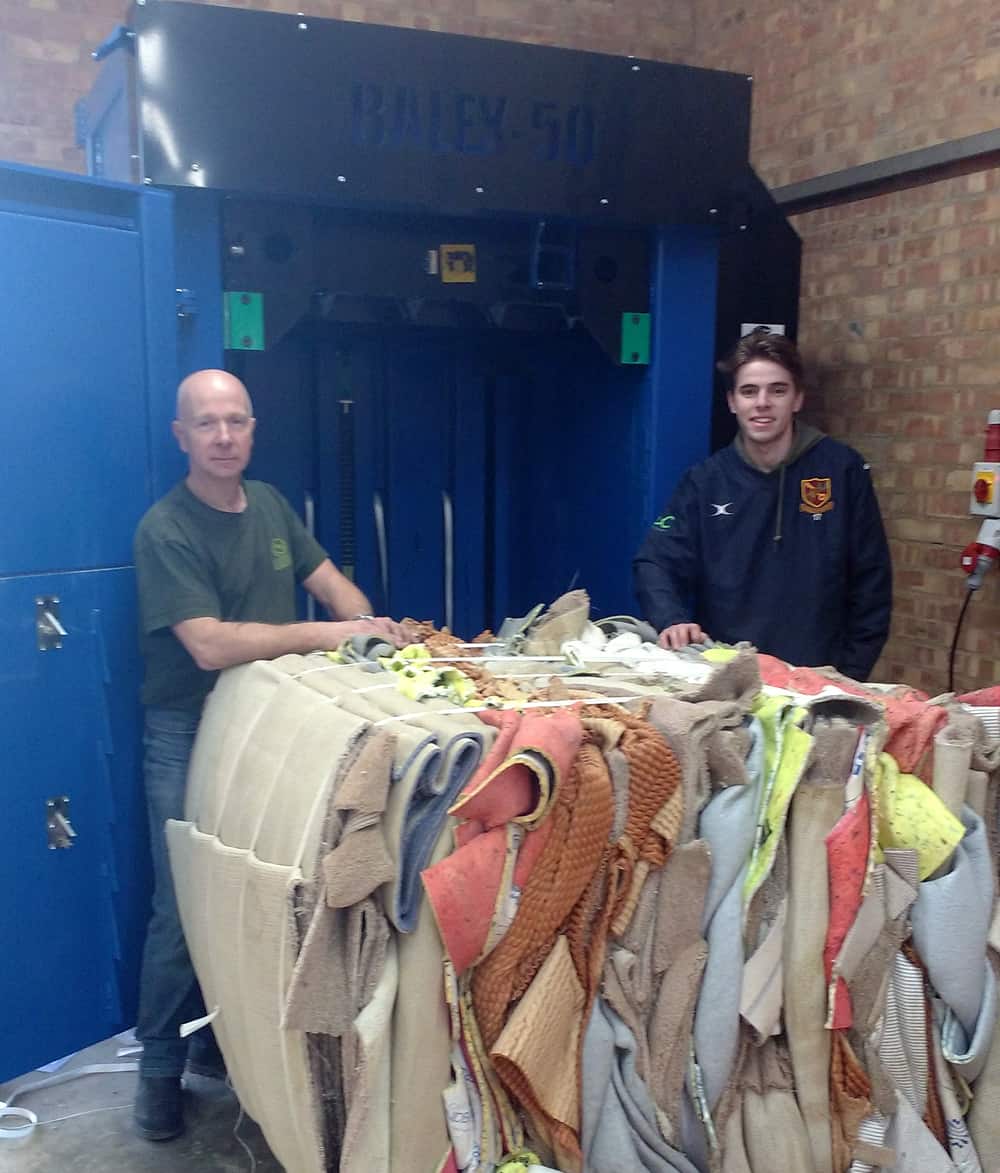
The core issue with carpet waste is density. Loose carpet takes up huge amounts of space for very little weight. A skip full of offcuts is mostly air, which means you are paying to transport empty space every time it gets collected. Multiple pickups a week is common for busy fitters, and skip costs have risen steadily alongside landfill tax.
A standard cardboard baler will not solve this. Cardboard balers are built for a specific material with predictable behaviour. Push carpet into one and you get jammed chambers, bales that fall apart, and a ram working well outside what it was built for. That is why the crusher exists as its own category.
Compaction changes the maths. A 4:1 ratio means one collection replaces four. That reduction shows up in transport cost, in carbon reporting, and in the amount of yard space you get back.
Signs your business needs a carpet crusher
Not every flooring business needs one. If you fit one or two jobs a week and your waste fits in a wheelie bin, this is not your machine. But if any of the following sound familiar, it is worth a closer look.
- You are paying for two or more skip collections a week and the costs keep climbing
- Carpet offcuts and roll ends are eating into working space in the yard or warehouse
- Customers or commercial tenders are starting to ask what you do with the waste
- You want to recycle carpet waste but the volume makes loose transport uneconomical
- Your team spends time managing waste that should be spent on installations
The transport point is often the deciding one. Recycling outlets exist across the UK, but sending a curtain-side van of loose carpet across the country makes no financial sense. Compacted bales change the equation.
Where the bales actually go
Once a bale leaves your site, it enters a recycling network that has grown steadily since Carpet Recycling UK was set up in 2007. By 2019, the industry-led body had enabled around 1.25 million tonnes of carpet waste to be diverted from landfill.
The end destination depends on the material. Polypropylene carpet, which makes up a large share of UK flooring, can be shredded, melted, and turned into plastic pellets. Those pellets are used to make products including car bumpers, roof tiles, and UPVC window frames. Mixed and post-consumer carpet often goes to energy recovery, where it displaces fossil fuels in cement kilns or municipal incineration.
The Kenburn carpet crusher was built specifically for this network. It was introduced to the UK flooring industry in 2013 and works in partnership with Carpet Recycling UK and a range of regional recycling outlets. That matters, because a machine without a collection route is a machine that fills your yard with bales you can’t move.
Real examples from UK flooring businesses
Genesis Patterns in Shipley used to send a curtain-side vehicle to Anglo Recycling in Rochdale once a fortnight, filled with offcuts stuffed into bulk bags. After installing a carpet crusher, that trip dropped to once every couple of months. Director John Foster puts the transport cost reduction at around 75%.
Cullingford Carpets in Somerset installed one to handle the volume of uplift waste generated by their installation team. Because they include uplifting and disposal of old carpet as part of their customer service, the machine turned a disposal cost into a manageable, recyclable output.
There is also a customer-facing angle. Carpet Design & Flooring in Liverpool reports that being able to tell customers their old carpet is recycled rather than landfilled has helped sales conversion. This lines up with a wider pattern in commercial flooring tenders, where landfill diversion is increasingly part of the scoring criteria.
Purchase, rental, and what to look for
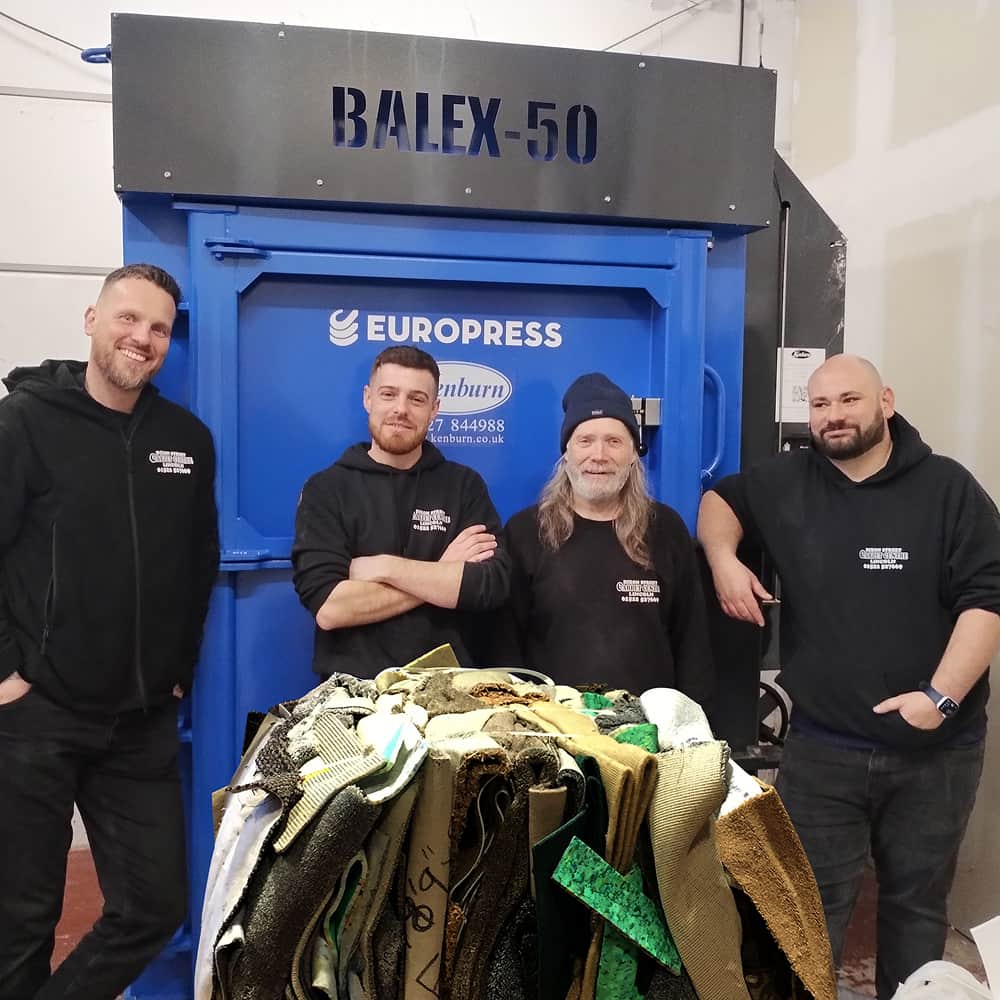
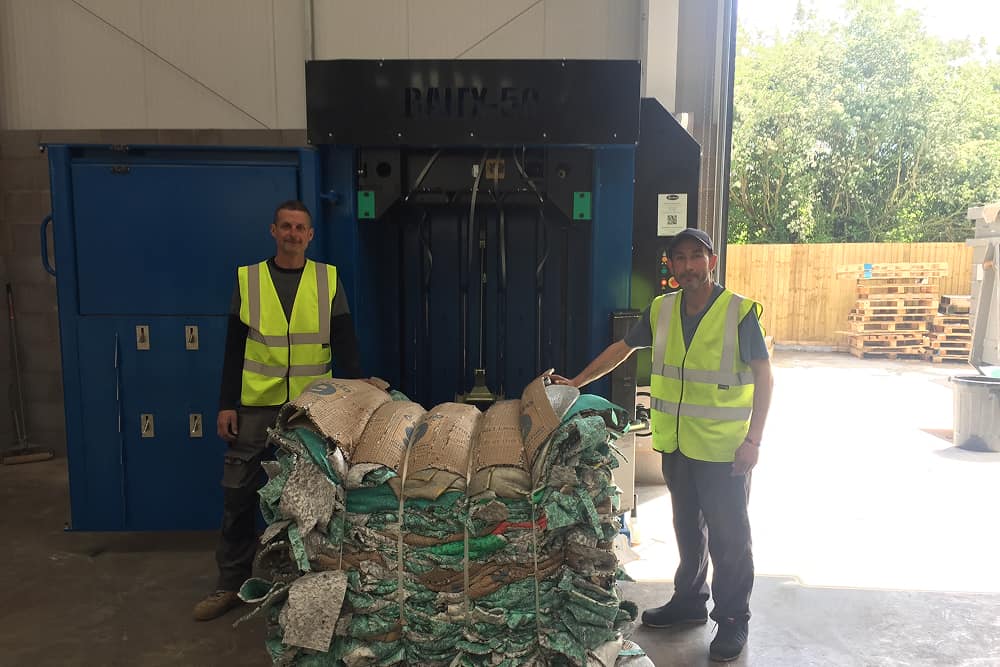
The machine is available on purchase or rental, and the right choice depends on how permanent your setup is. Rental suits businesses testing the concept or working from a leasehold site. Purchase makes sense when volume is steady and the payback comes through fast on reduced skip costs.
Before deciding, three things are worth checking. First, what warranty comes with the machine. The current Balex 30 carries a 2-year warranty. Second, whether operator training is included with installation, so your team can use it safely from day one. Third, what happens next on the recycling side. A machine without a collection and recycling route is a waste of capital.
The most useful starting point is usually a free site audit. A short visit to review your waste volumes and layout tends to answer the purchase-or-rent question faster than any brochure. It also flags whether a carpet crusher is genuinely the right machine, or whether a different setup would serve you better.
Making the call on carpet waste
A carpet crusher is not a machine every flooring business needs. It is a machine that pays for itself when carpet waste is a recurring cost you cannot design out. If you are running two or more skip collections a week, watching landfill tax eat into margin, or fielding tender questions about landfill diversion, the numbers usually stack up.
The alternative is not really an alternative. Loose carpet waste stays expensive to move, hard to recycle, and awkward to store. Compacting it on site closes the loop and turns a rising cost into a controlled one.
If you want to know whether one fits your operation, the Kenburn carpet crusher page has the full spec, and a free site audit gives you a straight answer on volumes, savings, and whether the machine is the right call for your setup.
Frequently asked questions
Can a normal cardboard baler compact carpet?
No. Standard cardboard balers have narrower chambers and lower ram force. Carpet is dense and springy and needs the kind of tonnage a carpet crusher applies to hold shape in a bale.
Does a carpet crusher handle underlay too?
Yes. It compacts new offcuts, uplifted post-consumer carpet, and underlay. The Kenburn machine also handles cardboard and plastic film waste, which covers most of what a flooring business produces.
What happens to the compacted bales?
They go to recycling outlets through the Carpet Recycling UK network. Depending on material, they become fuel for energy recovery or plastic pellets used in products like car bumpers, roof tiles, and UPVC window frames.
How much carpet does one pallet hold?
The Kenburn carpet crusher compacts 175 square metres of carpet onto one standard pallet at a 4:1 compaction ratio.
Can I rent one instead of buying?
Yes. Kenburn offers the carpet crusher on rental as well as outright purchase, which lets you match the arrangement to how your business operates.