Meet Simon
For anyone who doesn’t know you, give us the short version of how you ended up at Kenburn.
I’ve spent most of my career in businesses where the product is technical and the sale is relationship-led. That combination has always suited me. I have spent the last 22 years at Chas Storer Ltd, our Directors took the decision to give back to their employees and formed an Employee Ownership Trust of Chas Storer. Early into the EOT we acquired Kenburn Waste Management, a great asset to our recycling business. As part of the acquisition Kenburn needed a new Lead and I have been given the opportunity to become GM. I had an engineering background and like understanding how things work and I like working with customers over the long term rather than one-off transactions. Kenburn ticked both of those boxes. This opportunity felt like a natural fit.
What do you do when you’re not thinking about balers and compactors?
Spend time with family, mostly. I try to switch off properly at weekends, though anyone who runs a business will tell you that’s easier said than done. I like being outdoors, going on walking holidays with friends and walking the dog (Bobby). I enjoy the occasional pint of Guinness and good food.
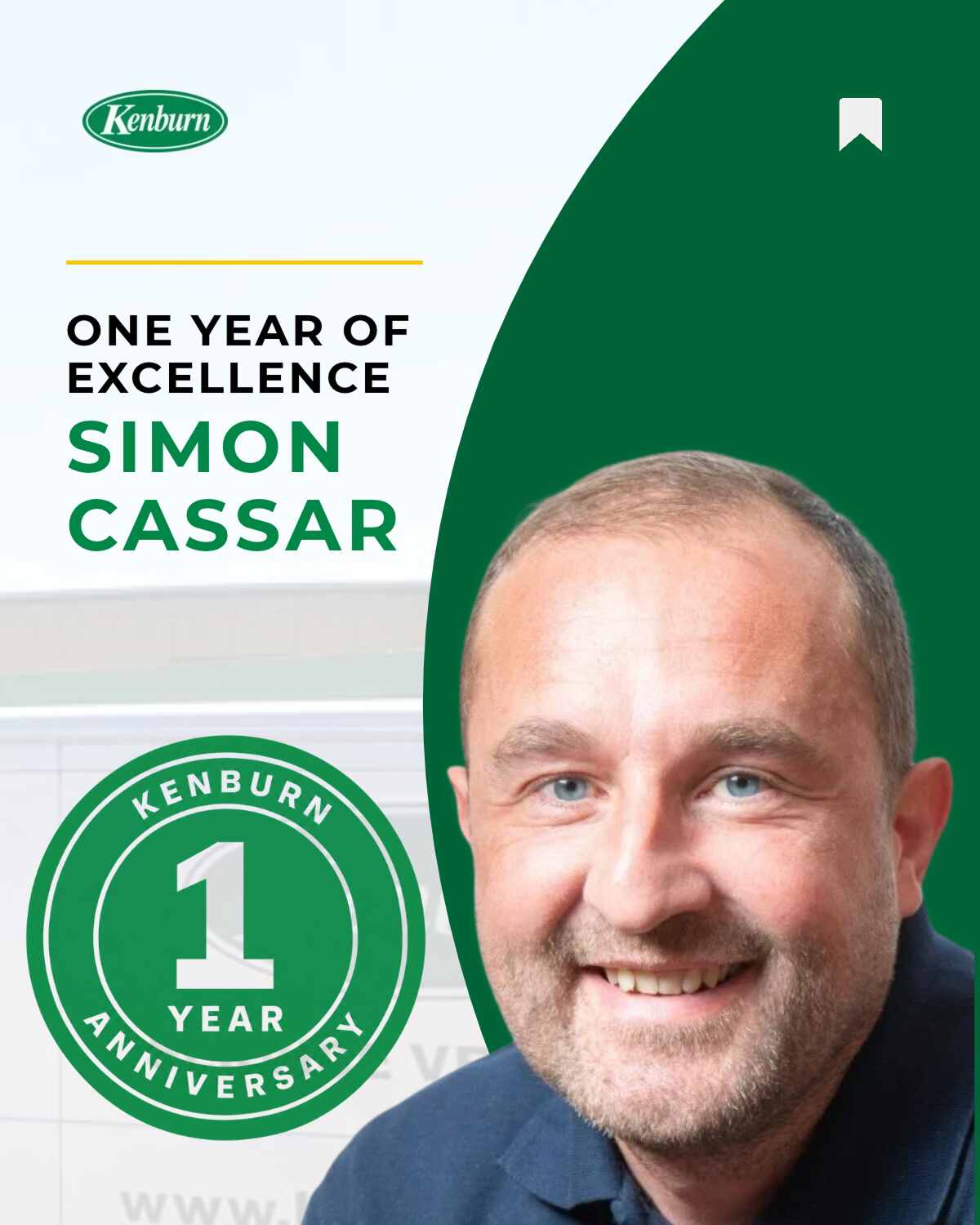
Reflecting on Year One
What made you say yes to the GM role at Kenburn?
Kenburn has been trading since 1987, and when a business lasts that long there’s usually a reason behind it. In this case it was the team and the relationships they’d built with customers over the years. The product range was strong too, but the people came first for me. That’s not a combination you come across often, so saying yes wasn’t a difficult decision.
What’s surprised you most in your first year?
How much of this industry runs on trust. You can supply the best baler or compactor on the market, but if a customer doesn’t trust the people behind it, none of it counts for much. I knew that in principle before I joined. I’ve watched it play out every week since.
The other thing that’s surprised me is how much customers want straight talk. People are tired of being sold to. They want someone who will look at their site properly and tell them honestly what’s going to work and what isn’t. Kenburn operates with transparency in mind.
What’s been the hardest lesson?
When you step into a role like this, there’s a pull to change things quickly so you look busy. I’ve had to resist that. A lot of what Kenburn does works well because it’s been refined over the years. My job in year one was to understand why, before I started moving anything around.
The Team and How We Work
You’ve talked a lot about the team. What kind of culture are you trying to build at Kenburn?
One where people can say what they think. I’d rather have a difficult conversation early than a polite one that costs us later. That applies internally and it applies with customers.
The other thing I care about is ownership & trust. If someone on the team spots a problem, I want them to feel able to raise it and, where they can, sort it out. Waiting for permission slows everything down. Our engineers and our office team already had a lot of that instinct before I arrived. My job is to protect it.
What’s your leadership style, and has it changed in this role?
I’d describe it as hands-off until it isn’t. I trust people to do the job they were hired to do, and I stay out of the detail unless I’m needed. When something isn’t working, I get involved quickly. What’s changed in this role is how much time I spend listening rather than deciding. As GM, you rarely have the full picture on day one. The team does. My job is to draw that out and then make the call.
The View From the Industry
How has the UK waste management sector changed in the last year?
Costs have gone up and regulation has tightened. Businesses are under more pressure on how they handle waste, what they can send to landfill, and how they report on it. That’s shifted the conversation. A year ago, some customers still saw waste equipment as a nice-to-have. Now it’s a line item finance directors are looking at properly, because the return is easier to see on paper.
There’s also more focus on food and organic waste, especially with Simpler Recycling coming into force. That’s brought a lot of businesses into conversations they weren’t having twelve months ago.
What’s the biggest misconception businesses still have about waste equipment?
That it’s a one-size-fits-all decision. I still speak to operations managers who assume a baler is a baler. It isn’t. The gap between the right machine and the wrong one for your site can be the difference between a sensible return and a piece of equipment that ends up being a headache. Waste stream, volume, floor space, staffing levels, whether it’s going inside the building or being sited externally, all of that matters.
The other misconception is that refurbished means compromised. Our refurbished machines are typically ex-rental units that we clean, prepare, and repaint. They come from stock we know well, and for plenty of businesses they’re the smartest way in.
With Chas Storer Ltd (CS Recycling) behind us we can expand our offering on some Recycled materials.
Where do you see the industry heading over the next five years?
Three things stand out to me. First, more automation on site, because labour is expensive and hard to hold onto. Customers want equipment that reduces manual handling. Second, better data (we can offer balers with smart Tech!). Businesses want to understand what they’re producing, when, and what it’s costing them, and equipment that feeds into that picture is going to matter more. Third, more scrutiny on suppliers to prove the whole lifecycle stacks up, from installation through to what happens when a machine finishes its working life.
Sustainability and Net Zero
Where does sustainability fit into the conversations you’re having with customers?
It comes up in almost every conversation now, but not always in the way people expect. Customers aren’t always leading with net zero targets. They’re leading with cost, compliance, and staff safety, and sustainability sits inside all of that. Compacting waste on site means fewer collections, which means fewer vehicle movements. Baling cardboard properly means it goes back into the recycling chain rather than landfill. Handling food waste correctly means you’re meeting regulation and cutting what you send off site. The sustainability story often follows the operational one rather than leading it.
What role does equipment like yours play in a business’s net zero journey?
A practical one. We’re not going to solve net zero on our own, and I’d be wary of any supplier who claims otherwise. What good equipment does is reduce the volume of waste leaving site, cut the number of collections needed, and in many cases turn a cost into a revenue stream through rebates on recyclable material. That’s a real contribution. It’s just one part of a much bigger picture.
Kenburn Today
Kenburn was acquired by Chas Storer Ltd (CS Recycling) in October 2025. How has that shaped the business?
It’s been a positive year. Kenburn continues to operate independently under its own brand, with the same team and the same approach our customers already know. What the acquisition has given us is more resource behind the scenes and a wider network to lean on. It hasn’t changed who answers the phone or who turns up on site.
For customers, the day-to-day is the same. What’s different is that we’ve got more capacity to invest in the areas we’ve wanted to develop for a while. Offering Collection services for recyclable materials.
What’s stayed the same, and what’s evolved?
The fundamentals have stayed the same. We still offer free site audits. Training is still available for every installation. Our engineers still know the equipment inside out, because most of them have been with us for years. The customer relationships haven’t changed either. Some of the businesses we work with have been with Kenburn for a long time.
What’s evolved is how we talk about what we do. We’re being more open about how we work, more visible online, and clearer on the choices customers have. New versus refurbished, purchase versus rental, which machine suits which waste stream. That’s been a deliberate shift, and it’s one of the things I’ve spent a lot of year one on.
The Product Range
For a business that doesn’t know where to start, how do you talk them through the range?
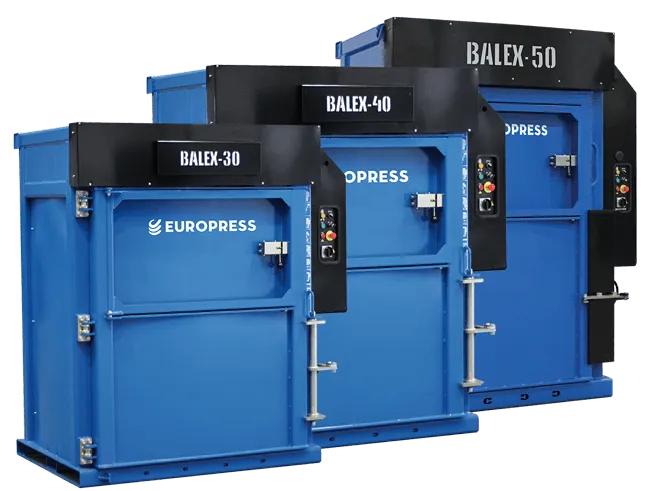
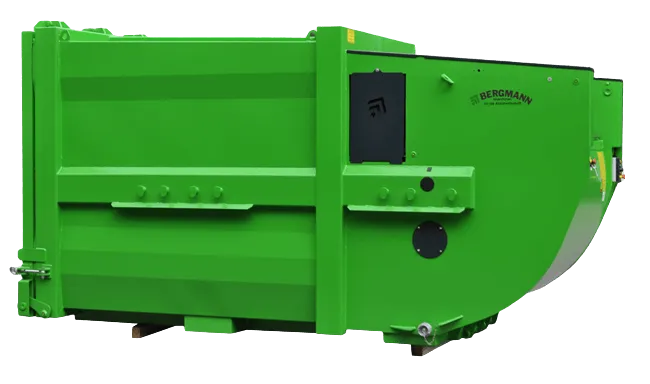
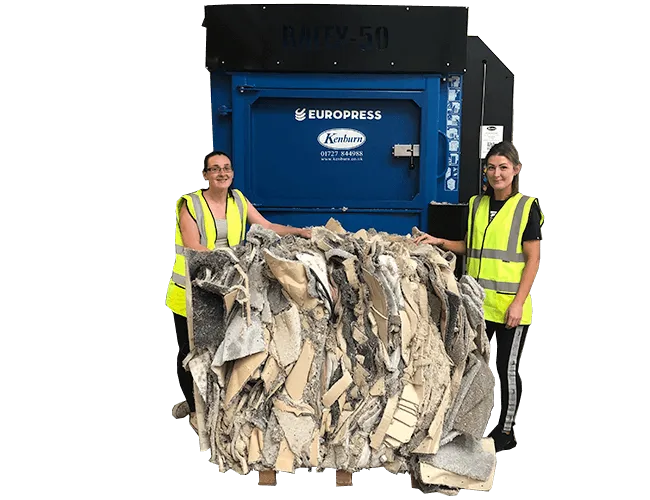
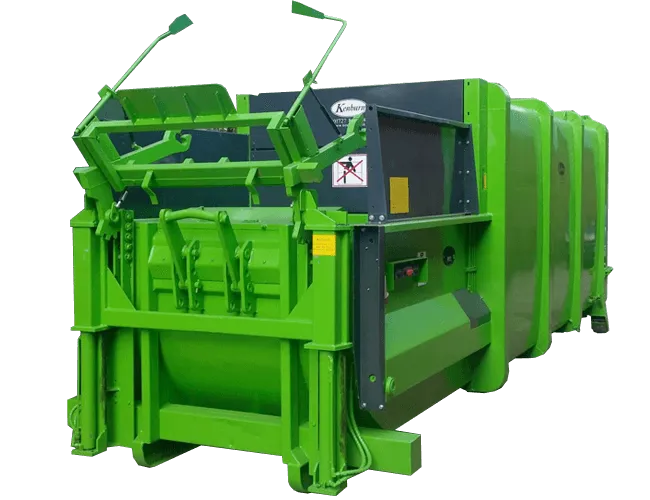
I start with the waste, not the machine. What are you producing, how much of it, where does it currently go, and what’s it costing you? Once we’ve got a clear picture of that, the machine choice becomes obvious. Cardboard-heavy site with a decent volume, we’re probably talking about a vertical baler. Larger operation with mixed waste streams, that’s more likely to be a static compactor or a portable compactor for the wetter material. Food or organic waste, we’ve got specific solutions for that too.
The point is, walking into a conversation with a specific machine in mind is the wrong way round. You start with the problem.
Advice
What’s your advice to a business about to invest in waste equipment for the first time?
Book a site audit before you spec anything. It costs you nothing, and it’s the single best way to avoid buying the wrong machine. Any decent supplier will do this. If a supplier is pushing a quote at you before they’ve walked your site, that tells you something.
Also, don’t rule out refurbished or rental without looking at them properly. Buying new isn’t always the right answer, and any supplier who only points you at new equipment isn’t giving you the full picture.
And to someone stepping into their first GM role?
Listen for longer than you think you should. You’ll be tempted to make changes early to prove you’re in charge. Some of those changes will be right and some will be premature. The team you’ve inherited knows things you don’t. Give yourself the time to find out what they know before you start making decisions.
Looking Ahead
What’s next for Kenburn in year two?
More of the same, done better. We’ll keep investing in the team, keep refining how we support customers after installation, and keep pushing on the areas where we know we can add more value. Food and organic waste is a big one.
I also want us to share more of what we know. This industry can feel closed off, and it doesn’t need to be. If publishing something useful helps a facilities manager or an operations lead make a better decision, we should be doing it.
What’s one thing you want customers and the industry to know as you head into your second year?
That we’re here to have the honest conversation. If a machine isn’t right for your site, we’ll tell you. If refurbished makes more sense than new, we’ll say so. If rental suits you better than buying, that’s what we’ll recommend. The goal isn’t to sell you equipment. It’s to solve the problem you’ve got.
A Message From Simon
“Year one has taught me that the best thing I can do in this role is listen. To the team, to the customers, and to the industry. Year two is about acting on what I’ve heard. I’m looking forward to it.”