
 It only takes one hot afternoon for a food waste bin to become the biggest problem on site. The smell drifts into the car park. A fox gets into the bin bags overnight. The kitchen team is left dealing with a mess nobody planned for. If this sounds familiar, you are not alone. Wet waste, food scraps, kitchen prep waste and anything liquid-heavy behaves nothing like cardboard or general rubbish, and treating it the same way is where most businesses go wrong.
Hospitality, healthcare and food production sites all generate wet waste every single day, often in tight back-of-house spaces where there is little room for error. Add new UK recycling rules into the mix, and getting wet waste handling right has stopped being a nice-to-have. This article explains what wet waste actually is, why it causes so many problems, what the law now expects, and how a proper wet waste compactor solves containment, odour and compliance in one go.
Why Wet Waste Is Different From Everything Else in Your Bins
Cardboard and plastic sit quietly until collection day. Wet waste does not. Food scraps start breaking down almost immediately, releasing liquid and smell as they go. That liquid is the real problem. It leaks, it stains, and it gives pests exactly what they are looking for.
Three things set wet waste apart:
- It is heavy and messy, adding weight and volume fast
- It smells within hours, not days, especially in warm kitchens or during summer
- It attracts flies, rats and foxes if left in anything other than a fully sealed container
This is why open bins, ordinary skips or unsealed compactors are the wrong tool for the job. Wet waste needs full containment from the moment it is generated to the moment it is collected.
The Real Cost of Getting Wet Waste Wrong
The cost of poor wet waste handling rarely shows up as one big bill. It shows up as lots of small ones. Extra collections because bins fill and smell too fast. Pest control call-outs. Complaints from guests, patients or neighbours. In the worst cases, enforcement action.
Local council guidance is blunt about the stakes. Pest problems cost money by contaminating food, damaging buildings and causing disease, and if customers find out, trade suffers. That is a reputational risk as much as a hygiene one, and it spreads fast once a business gets a name for it.
What Pest and Hygiene Rules Actually Require
Food businesses have a legal duty to prevent pests reaching food storage and preparation areas, and must be able to show they have done everything possible to keep pests out. Practically, that means sealed storage, no accessible food waste, and bins kept away from external walls with lids that shut properly. A wet waste compactor meets all three requirements in one unit, rather than relying on staff discipline alone.
What UK Law Now Requires
Since 31 March 2025, the rules changed for good. All workplaces in England must separate their recyclable waste before collection, including any waste produced by employees, customers and visitors. Food waste is now its own required stream, not something that can be bundled into general rubbish.
The detail matters:
- Businesses producing 5kg or more of food waste a week must arrange separate collection through a licensed provider
- Micro-businesses with fewer than ten full-time employees have until 31 March 2027 to comply
- The legislation affects retail, wholesale, offices, hospitality, health and social care, education, food manufacturing and transport and storage sectors
Some councils are behind schedule themselves. Reports found that 79 councils told the BBC they would not meet the deadline for compliant local collections, but that does not change what businesses are expected to do. Getting your own site sorted now avoids scrambling later.
Which Sectors Are Most Affected
Hospitality, healthcare and food production sit right at the centre of this. Restaurants, hotels, care homes, hospitals and food processing sites all generate wet waste daily, usually in spaces that were never designed with odour or liquid control in mind. If your site falls into any of these categories, wet waste is very likely your biggest compliance gap right now.
How Sealed Compaction Solves the Problem
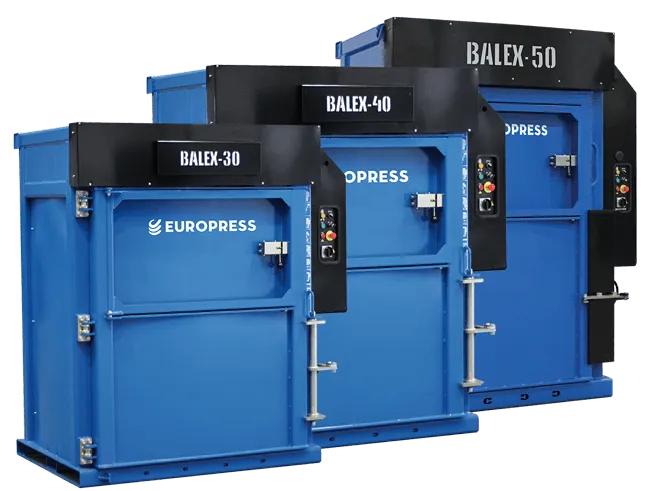
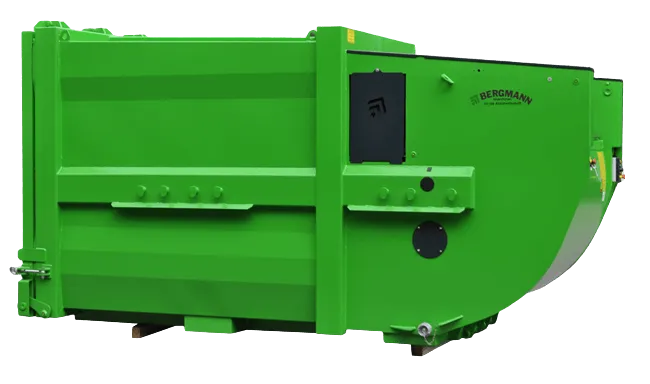
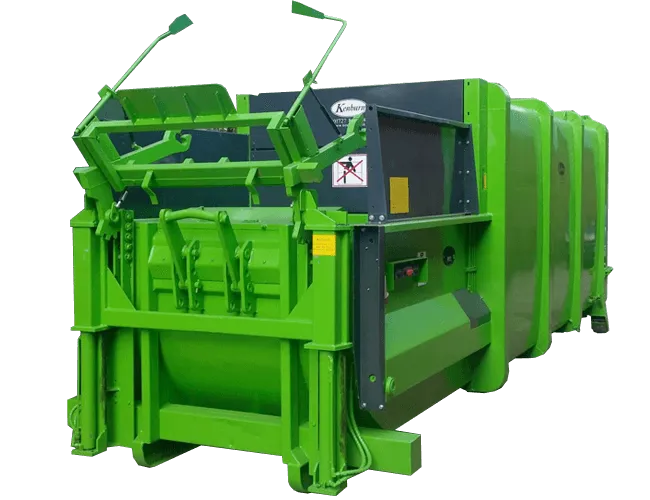
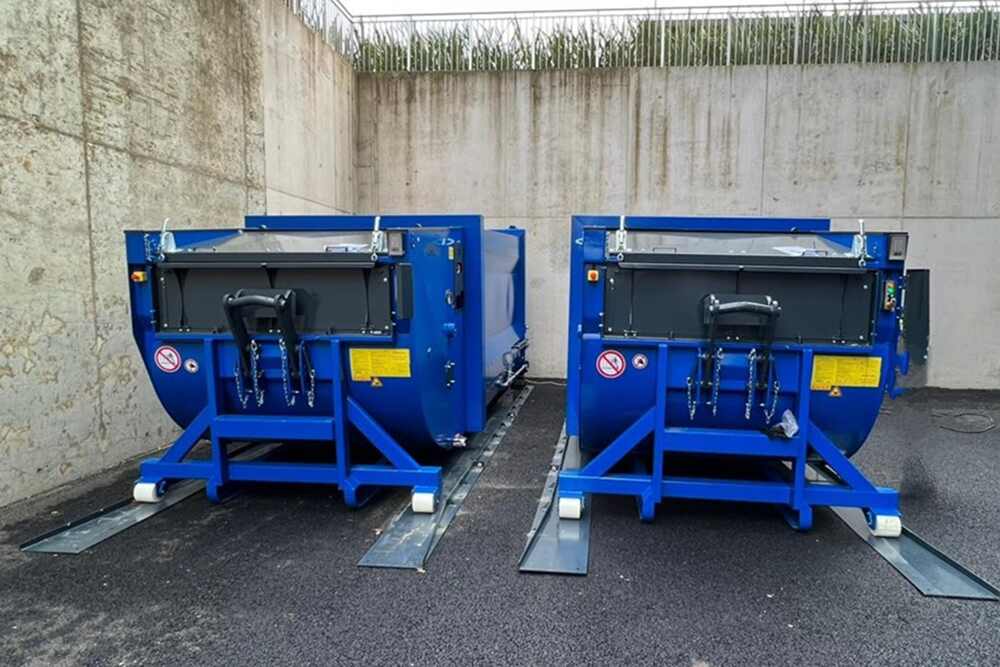
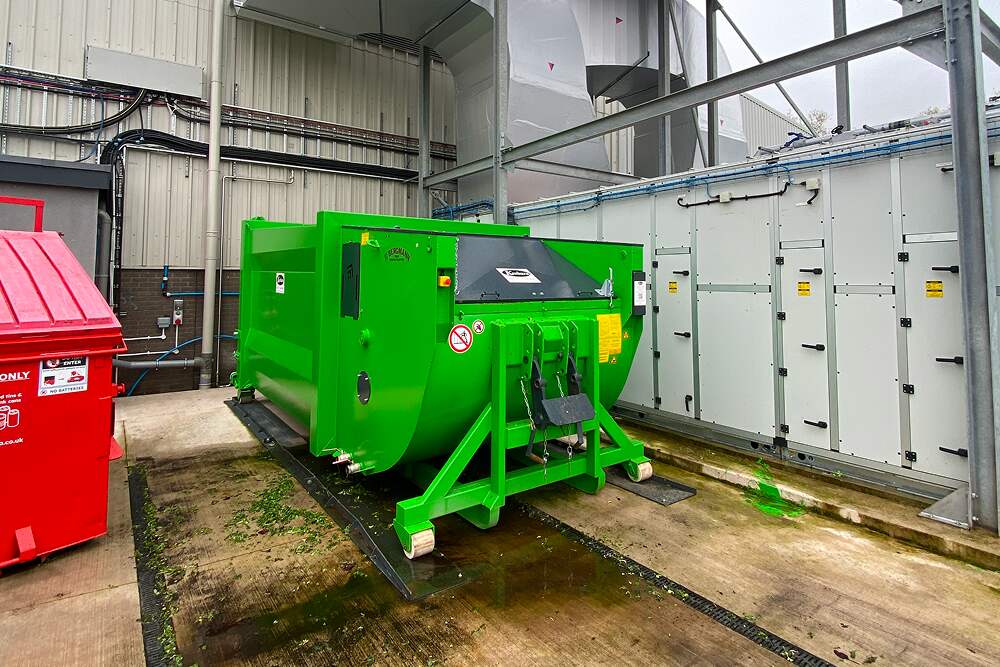
This is where the right equipment does the heavy lifting. A fully sealed wet waste compactor stops liquid escaping, controls smell, and cuts the number of collections a site needs.
The numbers back this up. Sealed compactors can achieve up to 70% volume reduction on food and wet waste, which means fewer collections, lower costs and far less time spent managing bins. For sites where noise matters, such as hospital wards or hotel corridors, quiet hydraulics running at around 59 dB keep operation practically unnoticeable.
Why Sealing and Self-Cleaning Design Matter
Not all compactors are built for wet waste. The door has to be sealed, not just closed, to stop effluent leaking out. A self-cleaning design, where a pendulum blade reaches under the waste rather than requiring a separate cleaning hatch, keeps maintenance simple and avoids the build-up of old waste that causes smell in the first place. For sites dealing with sharp seasonal peaks, an ozone generator option gives extra odour control during warmer months.
Matching the Right Solution to Your Sector
Every sector has slightly different pressure points.
- Hospitality kitchens need fast, quiet compaction that fits tight back-of-house space, covered in more detail in our waste management guide for restaurants and hotels
- Healthcare sites need very low noise and strict hygiene, since patient and staff areas cannot tolerate smell or disruption
- Food production lines need higher throughput compaction that can handle continuous, high-moisture waste without stopping the line
In every case, the goal is the same: contain the waste properly, reduce how often it needs collecting, and stay compliant without adding work for staff.
Solving Wet Waste Before It Becomes a Problem
Wet waste will always be part of running a kitchen, hospital or food production site. What has changed is how much room there is left to manage it badly. New separation rules, tighter hygiene expectations and rising collection costs all point the same way: contain it properly, compact it efficiently, and you remove most of the risk in one move.
If you are unsure where your site stands on food waste compliance or odour control, a free site audit is the simplest way to find out what would actually make a difference, rather than guessing.
FAQ
Do we have to separate food waste by law now?
Yes. Since 31 March 2025, workplaces in England with ten or more employees must separate food waste from general rubbish. Smaller businesses have until March 2027.
Will a sealed compactor smell?
No. Sealed units contain moisture and odour far better than open bins, and options like ozone generators help further during warmer months.
How much space and cost can compaction save?
Sealed wet waste compactors can reduce volume by up to 70%, meaning significantly fewer collections and lower ongoing costs.
Is it too loud for hospitals or hotels?
No. Quiet hydraulic models run at around 59 dB, quiet enough for patient and guest-facing areas.
What size business does this apply to?
Any business producing food waste, but the legal separation duty applies to those with ten or more employees now, and all businesses by 2027.