


 If your business produces cardboard, it has commercial value. The question is whether you are capturing it.
Baled cardboard is a traded commodity. Paper mills across the UK and Europe buy it to produce new corrugated packaging, and the price paid per tonne fluctuates with global demand. That price has ranged from under £30 to over £160 per tonne within a single decade. Where your bales land within that range depends on the grade of material, the quality of each bale, the volume you can offer, and how well you understand the market you are selling into.
This article sets out what baled cardboard is currently worth in the UK, how the main grades differ in value, and what practical steps move a business from average returns to the best available price. It also explains how recycling revenue fits into the broader financial case for investing in baling equipment.
What Is Baled Cardboard and Why Does It Have a Market Value?
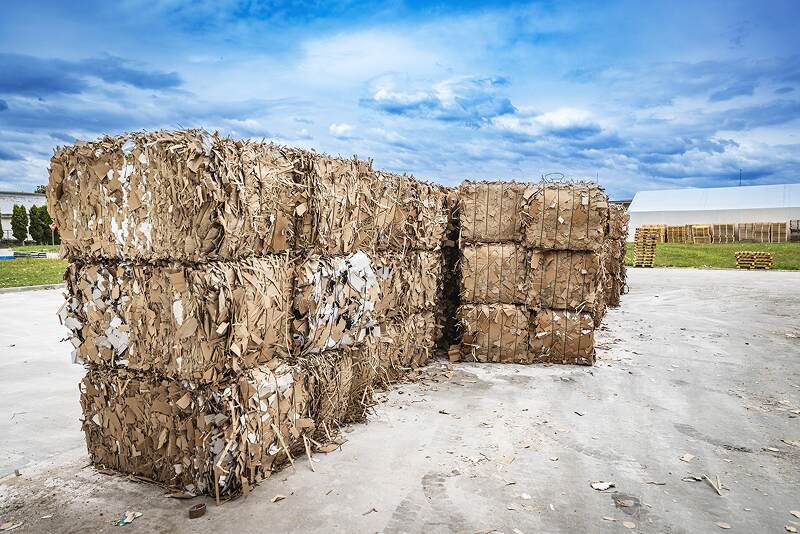
Cardboard that has been compressed into dense, tied bales is a usable raw material. Paper mills buy it, pulp it, and use the recovered fibre to manufacture new corrugated products. The same material thrown loose into a skip has no commercial value because it cannot be transported or processed at scale.
Baling is what creates the market. A bale of compressed corrugated cardboard is consistent in size, dry when handled correctly, and dense enough to be economical to transport. That is why businesses with a baler generate income from the same material that businesses without one pay to have removed.
The industry term for standard commercial cardboard waste is OCC, which stands for Old Corrugated Containers or Old Corrugated Cardboard. It is also referred to as KLS in older UK trade terminology. OCC is traded on global fibre markets, and its price is tracked monthly by industry publications including letsrecycle.com, which publishes both domestic mill and export price indicators for UK recovered paper grades.
Current Baled Cardboard Prices in the UK
What the market looks like in 2025 and 2026
In early 2026, the value of baled cardboard in the UK fluctuates around £55 to £102 per tonne. That is a wide range, and the variation reflects differences in grade, quality, volume, location, and the state of demand from domestic mills and export markets at any given time.
Over the past decade, UK OCC prices have ranged from £10 to £165 per tonne, with a long-run average of approximately £50 to £60 per tonne. For planning purposes, most industry practitioners treat £50 per tonne as a conservative base for OCC. Modelling the investment case for a baler at that figure, rather than at a recent peak, gives a more honest picture of the returns across a full market cycle.
After a sharp price rise in 2021 and a peak around £150 per tonne in mid-2022, the market corrected steeply in autumn of that year. A resurgence followed in early 2024 and again in summer 2025. As the market moves into 2026, rebates have been falling gradually and plateauing. Businesses that locked in collection agreements at the 2022 peak have since seen those arrangements erode in value, which underlines the importance of reviewing pricing annually.
For the most current figures, letsrecycle.com publishes monthly price indicators for domestic mill and export grades, updated on the 22nd of each month. These are the industry reference for UK OCC pricing.
What drives the price
OCC is priced by supply and demand. The key demand-side factors are domestic UK mill purchasing activity, the appetite of European mills (particularly in Germany, the Netherlands and Austria), and export demand from South and Southeast Asia. On the supply side, the volume of UK commercial cardboard entering the recycling stream and the price of virgin pulp as an alternative input for mills both influence what buyers will pay.
When energy prices rise sharply, mills cut production and reduce what they pay for incoming material. When export markets slow and European mills carry excess stock, UK prices fall. When ecommerce volumes surge and packaging consumption rises, demand for recovered fibre strengthens and prices recover. The market is genuinely global, and price signals from Asia can move UK rebates within weeks.
Understanding Cardboard Grades
 Not all cardboard is worth the same. The grade of material determines the baseline price, and knowing how grades work helps a business sort and present its waste in the most valuable way.
The primary grade for commercial operations is OCC (grade 1.05 in the letsrecycle classification). This covers corrugated shipping boxes and packaging and is the standard material produced by warehouses, distribution centres, retailers and manufacturers. It commands the highest standard rebate.
From January 2026, letsrecycle.com introduced a new 1.04 grade sitting between mixed paper (1.03) and OCC (1.05) to better separate the OCC category. This reflects industry demand for finer-grained price signals.
Mixed paper is a lower-grade mix of paper and board types, including cardboard, magazines, and office paper. It commands a lower price than OCC because it requires more processing to separate fibre grades at the mill. Businesses that bale OCC separately from other paper types preserve the higher OCC rate. Combining them degrades the whole bale to mixed paper pricing.
Double-Sorted OCC is a higher-grade classification typically generated by supermarkets and large commercial facilities where cardboard arrives clean, undamaged, and segregated from the start. It fetches a modest premium over standard OCC.
The practical instruction is straightforward. Keep corrugated cardboard separate from other paper and board. Strip plastic tape and remove food contamination before loading. Bale OCC on its own, and you collect the OCC rate. Mix it with other materials, and you collect the mixed paper rate. Over a year of high-volume production, that difference adds up to a significant sum.
5 Factors That Have the Biggest Impact on Your Cardboard Bale Price
Moisture content
Buyers price bales on a dry weight basis. Wet cardboard degrades, becomes mouldy, and loses fibre integrity, reducing its value as a raw material. Wet bales contain water weight that buyers are paying for but cannot use. Storing cardboard indoors and keeping finished bales under cover before collection is the single most straightforward quality improvement available to any operation.
Contamination
A clean OCC bale containing only corrugated cardboard, free of food contamination, plastic, metal, and non-cardboard packaging materials, achieves full market rate. A contaminated bale, even with low proportional contamination, may be rejected outright by the recycler or accepted at a significant discount. Bale rejection is the worst commercial outcome in a cardboard recycling programme: the transport cost is incurred, no revenue is received, and the bale must be disposed of at the operation’s expense.
Bale density and consistency
Denser bales are more economical for buyers to transport and for mills to process. Baled OCC commands better pricing because it signals to the buyer that the material has been handled consistently and is likely cleaner. Consistent bale weights, produced by a well-maintained machine running to a set programme, support price negotiations over time.
Volume and regularity of supply
Larger volumes command better prices because they reduce the per-tonne collection cost for the buyer and justify direct recycler relationships rather than broker arrangements. Consistent supply, the same volume available on the same schedule every week, is more valuable to a buyer than erratic supply. A business producing two to three tonnes of OCC per week on a predictable basis is a more attractive counterparty than one offering variable volumes at irregular intervals.
Collection arrangement and market conditions
In markets where OCC prices are healthy, buyers typically arrange and pay for collection as part of the commercial arrangement. At lower price points, some buyers charge a collection fee that reduces the net revenue per tonne. Understanding which arrangement is on the table at any given time matters. In a strong market, free collection with a rebate is normal. In a weaker market, expect to negotiate or absorb a collection cost.
Working Out What Your Cardboard Is Worth
The calculation is straightforward. Multiply the number of bales produced per week by the average bale weight to get your weekly tonnage, then apply the current OCC price per tonne.
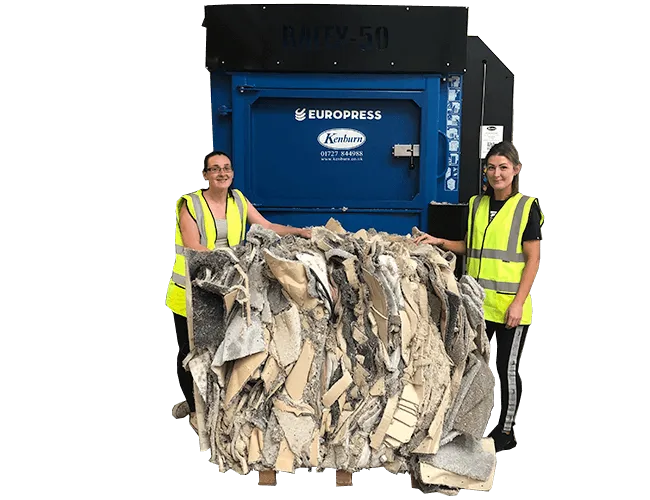
A distribution centre producing ten bales per week from a mill-size vertical baler, each bale weighing around 400 kg, is producing four tonnes per week or roughly 200 tonnes per year. At a conservative £50 per tonne, that is £10,000 per year in bale revenue, before accounting for the reduction in waste disposal costs.
Baling wire is a consumable cost that reduces the net income per tonne. At typical baling wire costs and a production rate of several bales per day, wire costs may run to £500 to £2,000 per year for a high-volume operation. Include this in any net revenue calculation.
The disposal cost saving is separate and in most cases larger. Cardboard balers can achieve up to a 7:1 compaction ratio. Fewer skip lifts and reduced collection frequency directly reduce the waste bill. The bale income then accelerates the return on the machine.
For a sense of what this looks like at scale, UK clients routinely generate over £38,000 per year from cardboard alone. That figure reflects high-volume operations with consistent, clean OCC, but it illustrates the ceiling for businesses in logistics, manufacturing and food production.
Bale Revenue and the Case for a Cardboard Baler
The financially robust investment case for a cardboard baler is built on the disposal cost saving first, with bale income treated as additional value rather than a core assumption. That framing protects the business from the temptation of modelling returns at peak-market prices.
What the two income streams together provide is a consistent return across the price cycle. Even when OCC prices are soft, the compaction saving on disposal costs holds. The bale revenue is a useful addition in ordinary markets and a meaningful one when prices are strong.
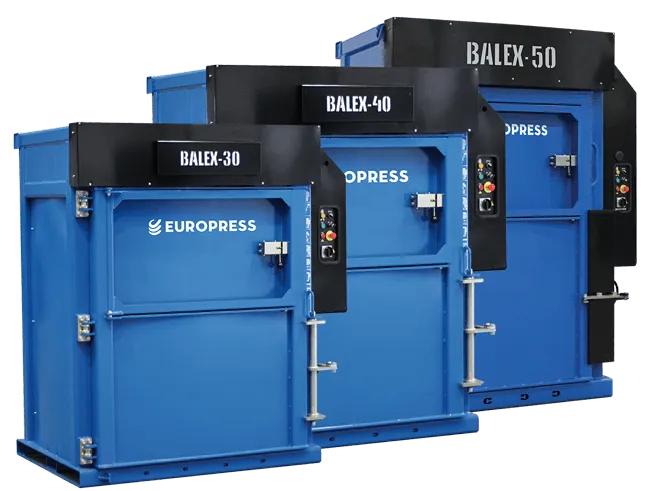
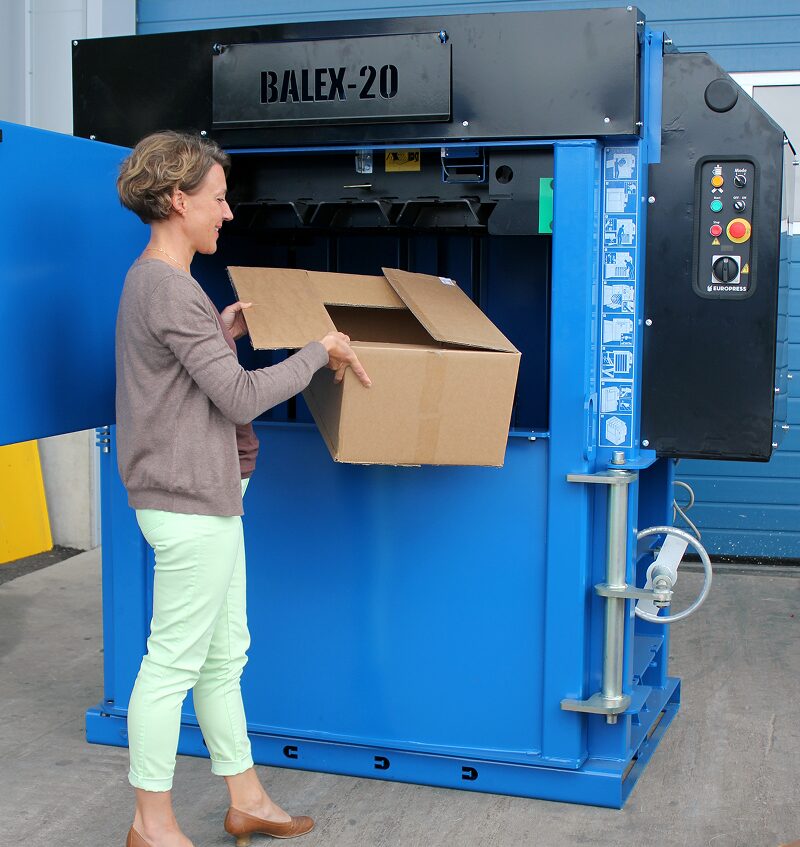
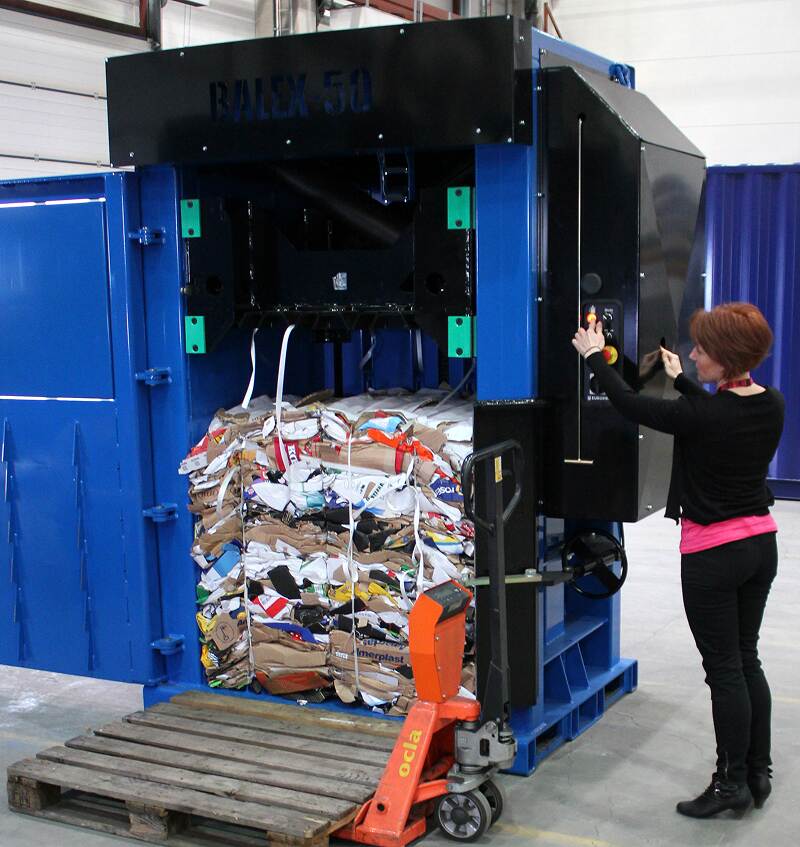
Kenburn’s cardboard balers range from compact vertical machines producing bales of 80 kg to 500 kg up to horizontal balers capable of producing mill-size bales of up to 700 kg, depending on the model. Larger, denser bales are more commercially attractive to buyers, so the choice of machine has a direct bearing on the price you can negotiate. For businesses with a budget that favours a lower entry cost, Kenburn’s refurbished machines offer the same baling performance at a reduced capital outlay, with a twelve-month parts and labour warranty included.
The baling process itself, from loading to bale ejection, is covered in detail in the waste baling guide on the Kenburn site, which is a useful primer for operations setting up a new cardboard stream.
Getting the Best Price: What to Do in Practice
Understanding price ranges and grades is only useful if it translates into action. These are the steps that make a practical difference:
Keep OCC segregated. Load only corrugated cardboard into the baler. Remove plastic tape, polythene liners and food-contaminated material before it goes in.
Store bales under cover. Finished bales left outside or in exposed areas absorb moisture quickly. Even if the inner portion remains dry, the outer layer of a wet bale will raise contamination flags with buyers.
Get multiple quotes. Contacting three to five buyers for current quotes on your specific material, specifying volume, grade, bale size, and collection frequency, gives you a realistic picture of the market and prevents you from accepting a below-market price from a single buyer.
Review pricing annually. Cardboard bale prices change significantly year to year. A collection contract agreed in a strong market may be providing below-market returns in an even stronger market. Set a date to revisit the arrangement and check it against current letsrecycle.com indicators.
Offer consistent volume. Reliability is a commercial asset. A buyer who can depend on a fixed volume arriving each week has less operational uncertainty and is in a better position to offer a strong per-tonne rate.