

A retail distribution centre spending £40,000 a year on skip collections recently worked out something uncomfortable. Around 70% of what they were paying to haul away was air. The waste itself made up a fraction of the volume going onto the lorries. The rest was empty space inside half-full containers.
That’s the gap waste compaction closes. By squeezing the air out of waste before it leaves site, a compactor reduces the number of collections needed, which cuts haulage costs, lowers carbon emissions, and frees up yard space.
This guide walks through how waste compaction works in practical terms. We cover what’s actually happening inside the machine, the difference between static and portable units, what compacts well and what doesn’t, the operational case for installing one, and what to check before you buy. The aim is to give operations and facilities-leads enough grounding to make a confident decision, without the jargon.
What Waste Compaction Actually Does
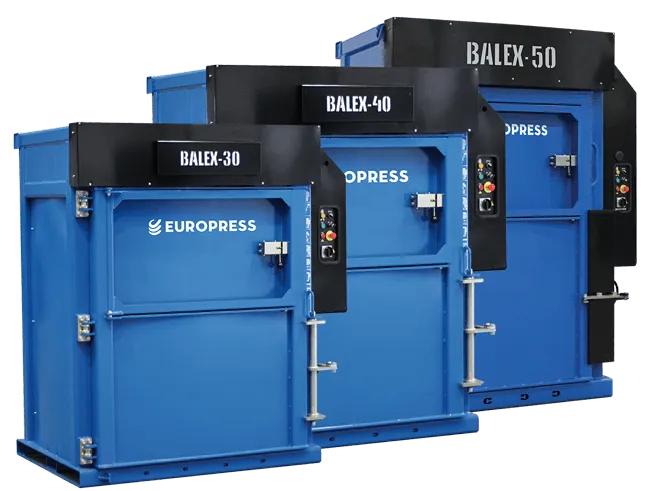
A waste compactor is, at its core, a hydraulic press with a feed hopper and a way of holding compressed waste in place. Loose waste goes in, a powered ram crushes it, and what comes out takes up far less space than what went in.
The standard measure is the compaction ratio. A 5:1 ratio means five lorry loads of loose waste now fit into one. Most waste compactors achieve somewhere between 4:1 and 8:1, depending on the waste type and the machine.
Most UK waste contracts charge two ways: a lift fee for each collection, plus a per-tonne gate fee for the weight tipped. Compaction works on the lift side of that equation. Cutting volume means fewer collections, which is where the haulage savings sit. A site that previously needed three skip swaps a week might drop to one. That’s fewer vehicle movements, less yard congestion, and a measurable reduction in haulage spend.
The per-tonne charge still applies to whatever you produce, but you’re consolidating that weight into far fewer trips, which is what makes the operational case stack up.
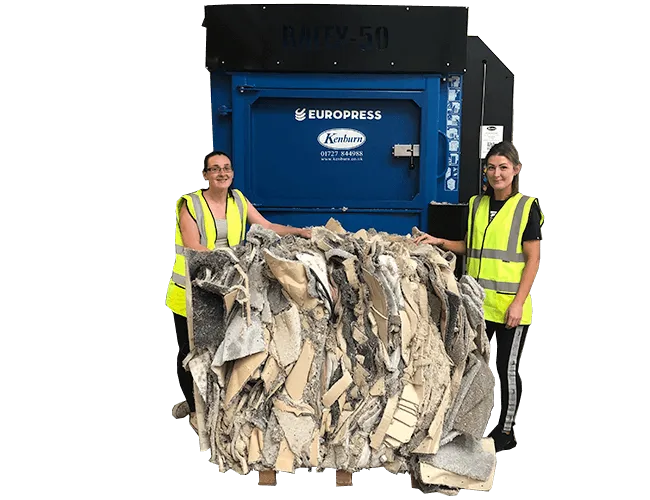
Compaction sits alongside baling, but the two do different jobs. A compactor reduces the volume of mixed waste heading for disposal. A baler compresses recyclables like cardboard or plastic film into uniform bales that can be sold on. Many sites run both.
Inside the Machine. How a Compactor Works Mechanically
The mechanics are simpler than they look from the outside.
The Hydraulic Ram and Charge Chamber
Waste enters the compactor through a feed hopper or chute, dropping into the charge chamber. A hydraulic ram, powered by a motor and pump, then drives forward, pushing the waste against the back wall of the chamber or into the attached container.
The ram retracts, more waste drops in, and the cycle repeats. Each cycle takes anywhere from 30 seconds to a couple of minutes, depending on the machine. Hydraulic pressure is measured in tonnes of force, and that’s what determines how dense the final load becomes.
The Container Interface
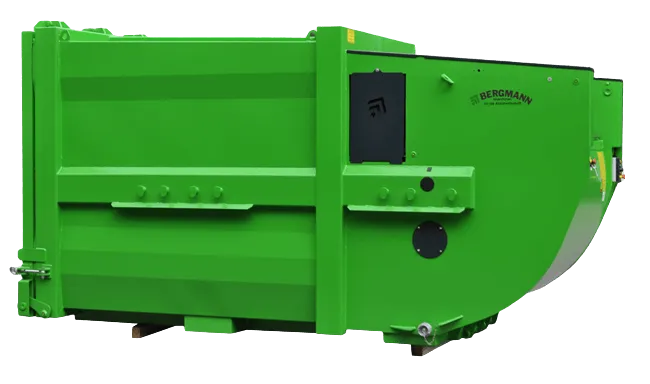
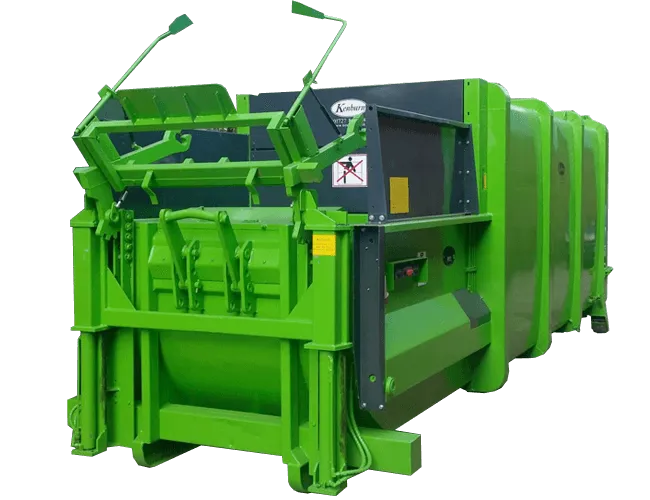
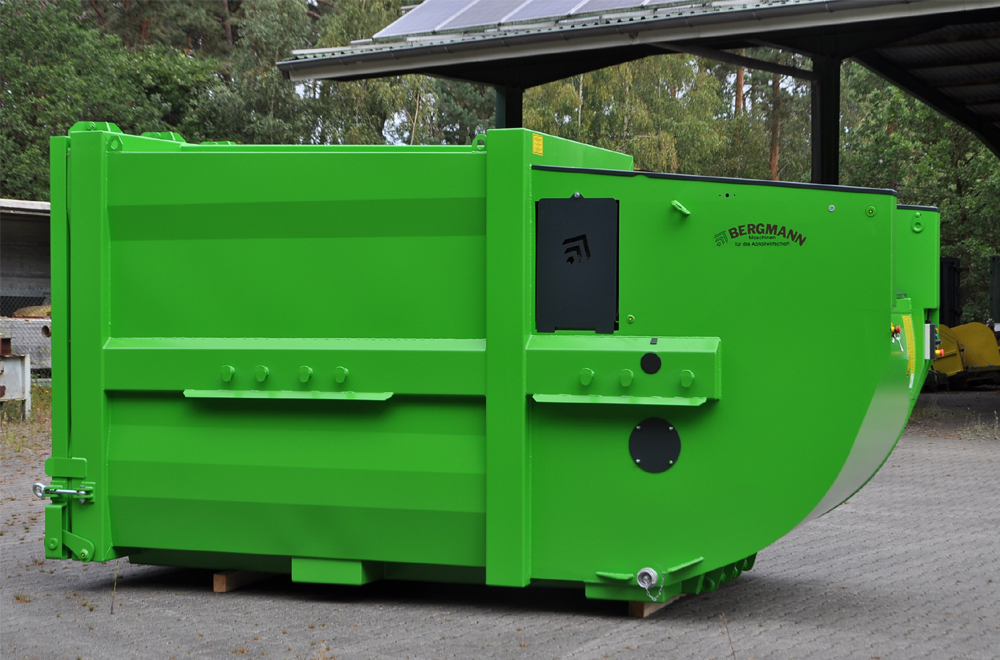
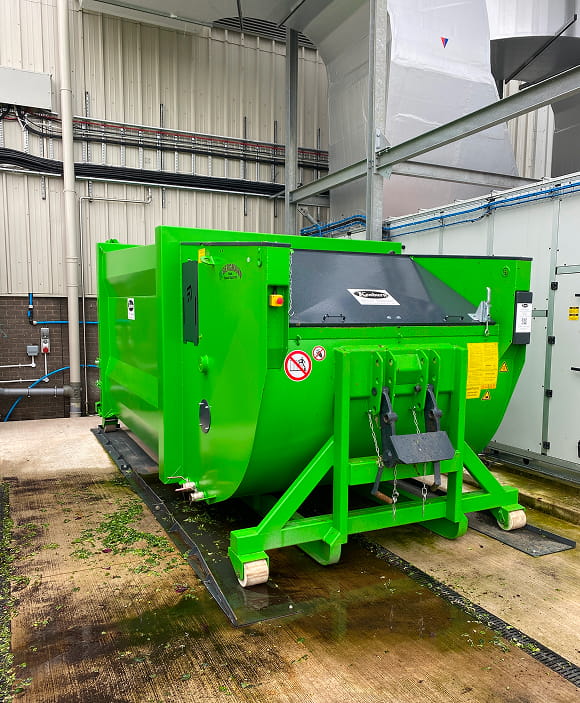
This is where static and portable units differ. A static compactor is a fixed unit that crushes waste into a separate, detachable container. When the container is full, it’s hauled away and replaced. A portable compactor is a single sealed unit. The whole thing leaves site for emptying.
The seal matters. Portable units are leak-proof, which is why they’re the right choice for any waste with liquid content. Static units are open at the container interface, so they’re suited to dry waste only.
Static vs Portable. Which Type Fits Which Site
This is where most procurement decisions are made or undone. The wrong choice causes ongoing problems. The right one quietly works for years.
Static compactors handle dry, non-putrescible waste. Cardboard compactors, or general waste options with no liquid content. They sit on a fixed footprint, paired with a roll-on/roll-off or hook-lift container that gets swapped when full. They’re the standard fit for distribution centres, warehouses, and any site producing high volumes of dry mixed waste.
Portable compactors come into their own with wet or organic material. Hospitality kitchens, supermarket back-of-house areas, food manufacturing sites, hospitals. Anywhere the waste stream includes liquids or putrescible content. The sealed unit prevents leaks, contains odours, and reduces pest issues. Wet waste compactors are a specialised subset built specifically for high-liquid loads.
Portable compactors can also compact dry general waste and also cardboard and plastic as well, If you don’t have the space for a static compactor with a separate skip, a portable compactor has a much smaller footprint.
A short way to think about it:
- Dry waste, high volume, fixed location: static
- Wet or mixed organic waste, any volume: portable
- Tight footprint, mixed dry waste: portable
- Bulky or awkward waste streams: specialist machines like jumbo roll packers or pre-crushers
A hotel and a distribution centre both produce a lot of waste, but they need different machines. A hotel running a static unit on mixed back-of-house waste will end up with leaks, smells, and a hygiene problem. A distribution centre running a portable on dry cardboard is paying for sealing it doesn’t need.
Wood Waste Needs a Different Machine
Neither a static nor a portable compactor is the right fit for wood waste. Pallets, offcuts, and bulky timber don’t yield to a flat ram in the way mixed waste does.
For wood, the answer is a jumbo roll packer. The machine uses a large drum fitted with spikes that breaks down wood waste on a 4:1 compaction ratio. The result is a measurable shift in what your skip actually holds. A loose skip of pallet waste typically tops out around 3 tonnes. The same skip, packed by a jumbo roll packer, takes up to 12 tonnes.
That’s a 75% reduction in transport and skip exchange costs, on a waste stream that’s usually treated as a fixed cost of doing business.
What You Can and Can’t Compact
Understanding how waste compaction works also means knowing where it stops being useful.
Materials that compact well include cardboard, paper, plastic film, mixed general waste, and food waste in portables. Anything that has air in it, essentially.
Materials that don’t belong include hazardous waste, large rigid items that won’t yield under pressure, and recyclables that should be baled instead. Putting clean cardboard through a general waste compactor turns a sellable commodity into landfill cost. That’s where a cardboard baler earns its keep.
There’s also a legal limit worth knowing. UK road regulations cap container weights for transport. Over-compaction can produce a load that’s too heavy to leave site legally, which means the haulier refuses pickup and the container has to be partially emptied first. Properly specified machines and trained operators avoid this, but it’s a real risk on sites that run compactors at maximum pressure without thinking about payload.
The Operational Case. What Compaction Actually Saves
The commercial argument for compaction is straightforward, and it gets stronger as landfill tax climbs. The UK standard rate hit £126.15 per tonne in April 2025, and it’s continued to rise. Anything that reduces what you send to landfill, or reduces the number of trips to get it there, has a direct effect on the bottom line.
The main savings sit in four areas:
- Fewer collections, which cuts haulage costs directly
- Reduced vehicle movements, which lowers Scope 3 emissions for carbon reporting
- Reclaimed yard space, which often unlocks operational improvements elsewhere
- Lower exposure to rising disposal costs
A logistics hub with a fill-level sensor on its compactor can move from fixed-rota collections to on-demand pickups, paying only for the lifts it actually needs. For a busy site, that’s often the largest single line of saving.
Finance options make the maths easier when capital budget is the blocker. Leasing or rental spreads the cost while the operational savings start immediately, which usually means the machine pays for itself well inside the contract term.
Site Requirements and What to Check Before Installation
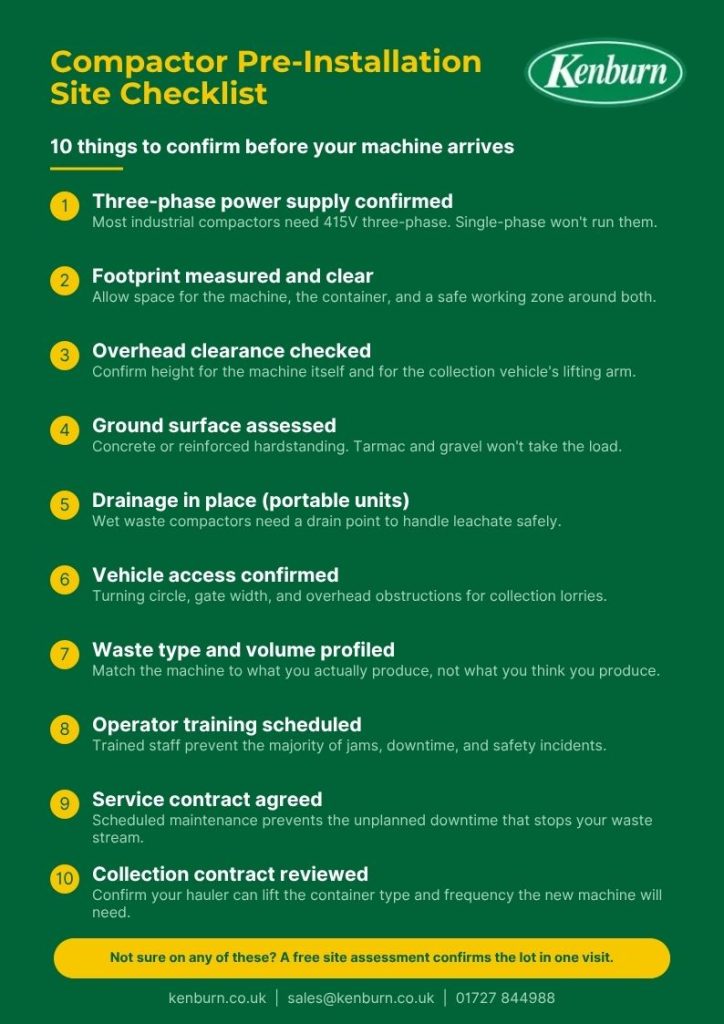
Most procurement mistakes don’t come from picking the wrong machine. They come from skipping the site assessment.
The basics to confirm before ordering anything:
- Power supply, usually three-phase
- Footprint and overhead clearance for the machine and the container
- Drainage for portable units handling wet waste
- Vehicle access, including turning circle and overhead obstructions for collection lorries
- Operator training and PUWER compliance
- Servicing access for ongoing maintenance
A free site visit removes most of the guesswork. A specialist will measure the space, check the power, look at access, and recommend a machine that matches the actual waste profile rather than a best-guess spec.
Installation services handle the practical side once the machine is chosen, and operator training makes sure the staff using it day-to-day know how to do so safely. A trained operator avoids the common causes of jams and downtime, which is a real cost on high-throughput sites.
New, Refurbished, or Financed. Choosing the Right Route
Capital pressure is real, and it shouldn’t push sites into the wrong decision. There are three credible routes, and each makes sense in different circumstances.
Buying new makes sense when you need a specific spec, expect the machine to run hard for a decade or more, or want full warranty cover from the start.
Buying refurbished makes sense more often than people expect. A properly refurbished compactor, fully tested and warrantied, typically costs 30-50% less than new. The misconception that refurbished means lower quality doesn’t survive contact with a reputable supplier. The machines are stripped, repaired, repainted, and recommissioned to a known standard.
Finance and leasing work well when the operational case is clear but the capital isn’t available. The savings start as soon as the machine is in. The cost is spread over time. For most sites running significant waste volumes, the finance route pays for itself comfortably.
Servicing, Downtime, and Why It Matters
A compactor that breaks down stops the entire waste stream. That’s the part that catches sites out. The unit itself might be a small line on the budget, but the consequences of unplanned downtime, in lost productivity, blocked yards, and emergency haulage, are not small.
Repairs and maintenance on a scheduled service contract is the standard way to manage this. Hydraulic checks, ram inspections, electrical servicing, all done on a defined interval before things fail.
The other side of reliability is operator behaviour. Most compactor jams are caused by what’s been put into the chamber, not by the machine itself. Mixed loads with rigid items, oversized cardboard not broken down first, contamination from the wrong waste stream. Training fixes the majority of these issues, which is why it’s worth investing in upfront rather than treating it as an afterthought.
Waste compaction is, at its core, about removing air.
That single principle drives everything else, including the cost savings, the emissions reduction, and the operational improvements that come from fewer collections and better-organised yards.
The right machine depends on the waste stream, the throughput, and the site itself. Static units suit dry waste at fixed locations. Portable units handle wet and organic material. Specialist machines fill the gaps in between. The procurement decision sits alongside choices about new versus refurbished, capital versus finance, and the level of servicing and training that protects the investment over time.
For most sites considering compaction for the first time, the honest answer to “is this worth it?” comes from a proper site assessment, not a brochure. A free on-site visit, walking through the actual waste profile and the actual constraints, gives a far clearer picture than any general guide can. If that’s the next step, getting in touch is the simplest way to start.